

Industrial Automation Singapore: How to Choose the Right Automation Partner
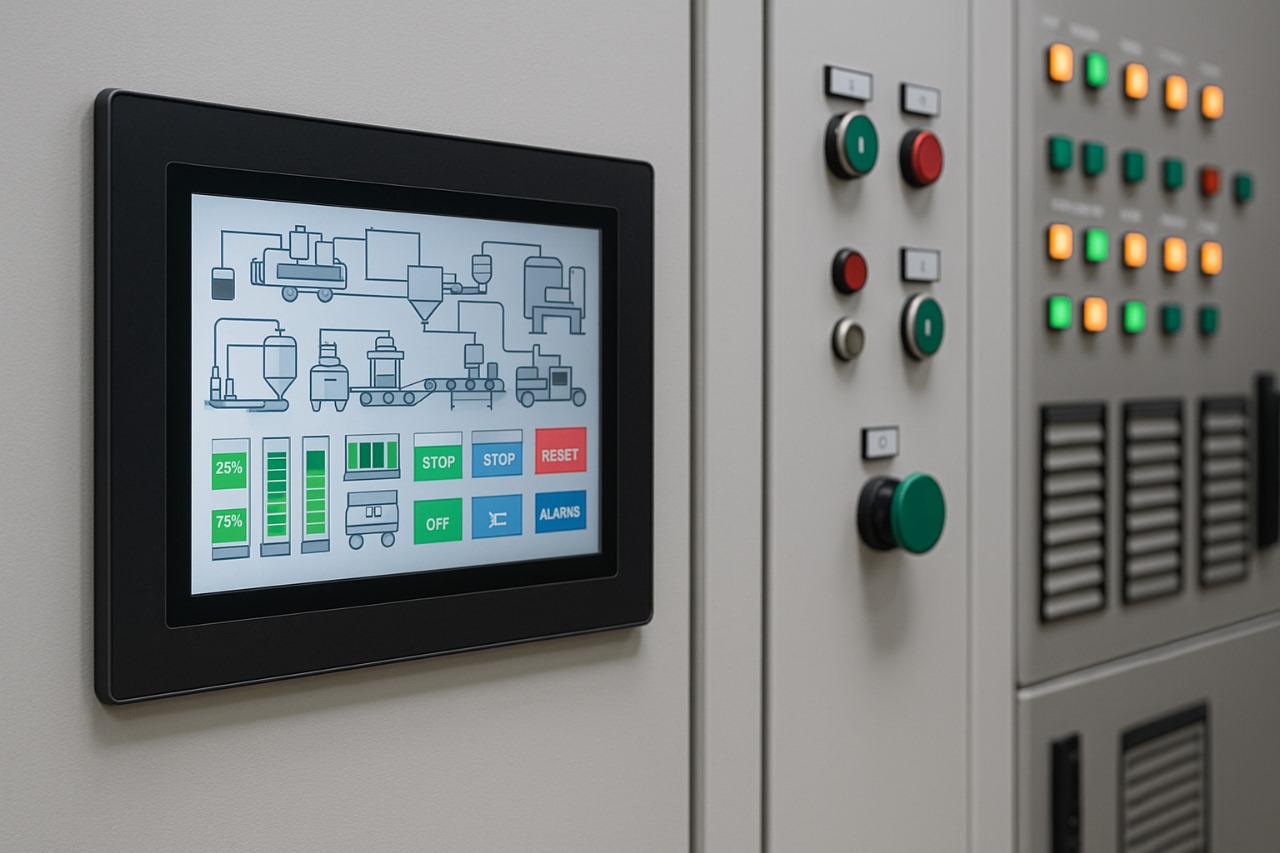
How to Choose the Right Industrial Automation Partner in Singapore in 2026
Singapore’s manufacturing sector is moving deeper into advanced automation, smart production, and connected operations. The national push toward advanced manufacturing, Industry 4.0, and smarter factory systems means that businesses are no longer asking whether to automate, but how to automate well. Singapore’s Economic Development Board continues to position advanced manufacturing as a key growth engine, while Enterprise Singapore highlights Industry 4.0 as a way for companies to improve monitoring, control, optimisation, and expansion.
That shift creates a major decision point for manufacturers, OEMs, machine builders, and plant operators: choosing the right industrial automation partner in Singapore.
This decision matters more than many companies realise. A good automation partner does not simply supply hardware. They help you define the right architecture, integrate systems correctly, reduce implementation risk, support commissioning, and create a scalable path for future upgrades. A poor partner, on the other hand, can leave you with mismatched products, limited visibility, recurring downtime, and expensive retrofits later.
If you are evaluating industrial automation companies, system integrators, or motion control specialists in Singapore, this guide will help you understand what to look for, what questions to ask, and how to identify a partner that can support long-term operational performance.
Why the choice of automation partner matters
Industrial automation projects affect core business outcomes. They influence machine uptime, cycle time, product quality, operator efficiency, safety, data visibility, and maintenance requirements. Whether you are introducing servo systems, PLC controls, HMI interfaces, drives, industrial networking, or machine retrofits, the success of the project depends heavily on implementation quality.
In Singapore, this is especially relevant because many manufacturers are under pressure to become more productive, more precise, and more resilient. The Smart Industry Readiness Index, launched by Singapore EDB with TÜV SÜD, was created specifically to help industrial businesses assess and prioritise transformation across technology, process, and organisation. That is an important reminder: automation is not just about hardware. It is about the full operating system of the factory.
A strong automation partner understands this wider picture. They look beyond the component level and help align your control systems, production goals, and future roadmap.
What an industrial automation partner should actually do
Many companies still think of automation vendors as product suppliers. In reality, the best partners do far more.
A capable industrial automation partner should be able to support:
- system design and solution planning
- product selection based on application needs
- PLC, HMI, servo, drive, and control integration
- panel design or control architecture support
- machine retrofit and modernisation
- commissioning and testing
- troubleshooting and optimisation
- local technical support after deployment
- scalability planning for future expansion
This is where the difference between a distributor and a real solutions partner becomes clear. ServoConnect, for example, positions itself as a total solution provider for drive and motion control systems, industrial automation products, and machine integration, while also highlighting its role as an authorised machine integrator for Schneider Electric.
For buyers, that kind of end-to-end capability is valuable because it reduces fragmentation. Instead of managing multiple vendors for products, programming, integration, and support, you work with one partner that understands the whole application.
Signs you are ready to evaluate automation partners
You may need a new industrial automation partner if your business is dealing with any of the following:
- repeated machine downtime
- inconsistent product quality
- high manual intervention on critical processes
- aging control systems that are hard to maintain
- lack of production visibility
- poor integration between machines and software
- rising maintenance costs
- bottlenecks in motion control or cycle time
- difficulty scaling production without adding labour
In many cases, these issues are symptoms of outdated or poorly integrated systems rather than isolated equipment failures. The right partner helps identify root causes and recommends a solution that fits both present operations and future growth.
- Look for solution capability, not just product access
A common mistake in vendor selection is choosing a company simply because they stock well-known brands. Brand access is important, but it is not enough.
Industrial automation systems succeed when the components are chosen and integrated as part of a well-planned solution. A partner should be able to explain not just what products they offer, but why a particular control architecture, motion platform, or HMI setup is right for your process.
This matters because modern production systems are increasingly interconnected. Singapore’s advanced manufacturing push is built around smart systems, digital visibility, and higher-value operations, not standalone components.
When evaluating an automation partner, ask whether they can help with full application thinking:
How will the PLC communicate with the rest of the system?
How will operators interact with the machine?
How will servo performance affect throughput and quality?
How easy will maintenance be after commissioning?
Can the system be expanded later?
A good partner answers these confidently and in business terms, not just technical jargon.
- Prioritise integration experience
Integration capability is one of the strongest indicators of a reliable automation partner.
In many factories, the challenge is not buying hardware. The challenge is making everything work together cleanly. That includes PLCs, HMIs, drives, servo motors, sensors, control panels, safety systems, communication protocols, and sometimes industrial PCs or networked software layers.
An automation company with integration experience is more likely to:
- reduce compatibility issues
- shorten commissioning time
- avoid overengineering
- improve troubleshooting speed
- deliver more stable performance
ServoConnect’s positioning as an authorised machine integrator is important here because integration expertise often matters more than the size of a product catalogue.
When you speak to a potential partner, ask for examples of integration work they have handled. Even if confidential details cannot be shared, they should be able to discuss the kinds of applications, challenges, and outcomes they support.
- Choose a partner with strong local support in Singapore
Industrial automation is not a one-time purchase. It is an ongoing operating relationship.
That is why local support matters. If something goes wrong during commissioning, or if your production line needs adjustment after deployment, fast access to technical help can make a meaningful difference to downtime and production continuity.
A strong Singapore-based automation partner should be able to provide:
- local consultation
- on-site or remote troubleshooting
- responsive technical support
- access to replacement parts or compatible alternatives
- guidance during upgrades or system modifications
This local presence becomes especially valuable for businesses running time-sensitive operations. A cheaper supplier without strong support may look attractive upfront, but if every issue turns into delay, escalation, or guesswork, the total cost becomes much higher.
- Check whether they understand your industry and application
Not every automation requirement is the same. Motion control for packaging is different from control needs in materials handling, semiconductors, process environments, or OEM machine building.
The right automation partner should understand the operational priorities of your application. Depending on the environment, that could mean:
- precision and repeatability
- speed and synchronisation
- safety and compliance
- harsh environment durability
- compact system design
- integration with existing infrastructure
- energy efficiency
- data visibility and reporting
An experienced partner will not push the same configuration for every project. They will tailor the recommendation to your production goals, space constraints, operator needs, and maintenance realities.
- Assess their technology ecosystem and brand partnerships
Trusted brand partnerships can be a strong sign of technical credibility, provided they are backed by real capability.
ServoConnect’s website highlights partnerships with established industrial brands and its status as a Schneider Electric authorised machine integrator. That kind of positioning matters because recognised automation ecosystems often bring better interoperability, support depth, and long-term availability.
For buyers, the key question is not only which brands a company supplies, but how well they work within those ecosystems. Can they configure, integrate, and support those technologies effectively? Can they advise on the best fit rather than just the most available item?
Look for a partner that combines product breadth with engineering judgment.
- Make sure they think in terms of ROI, not only equipment
The best automation partners do not frame every conversation around products. They frame it around outcomes.
That means discussing:
- downtime reduction
- throughput improvement
- labour efficiency
- quality consistency
- waste reduction
- machine life extension
- maintenance simplification
- energy optimisation
This business-outcome mindset is important because automation investments are usually justified by performance improvement, not hardware ownership. Even Singapore-focused automation content is increasingly centred on productivity, efficiency, and practical transformation outcomes.
When a partner can connect technical decisions to operational results, they are more likely to become a valuable long-term advisor.
- Look for scalability and future-readiness
A system that works today but limits you tomorrow is not a strong investment.
As factories evolve, you may want to add machines, improve visibility, connect more data points, introduce predictive maintenance, or move toward a broader Industry 4.0 roadmap. Singapore’s manufacturing ecosystem is clearly heading in that direction, with advanced manufacturing and readiness frameworks encouraging more connected and systematic transformation.
Your automation partner should therefore be able to answer:
- Can this system scale?
- Can we retrofit additional functions later?
- Will spare parts and support remain available?
- Can this architecture integrate with future digital initiatives?
Future-ready planning does not always mean building the most complex system now. Often it means building the right foundation so future upgrades are smoother and more cost-effective.
- Evaluate communication, documentation, and project discipline
Technical capability alone is not enough. Automation projects also need structure.
A good partner should communicate clearly about:
- project scope
- assumptions
- hardware choices
- software responsibilities
- commissioning plan
- delivery risks
- timelines and dependencies
- support boundaries
Poor communication creates confusion, delays, and cost overruns. Good communication reduces risk and helps internal teams align faster.
This is especially important when multiple stakeholders are involved, such as production, engineering, maintenance, and procurement. The right partner helps bring clarity across those groups.
Questions to ask before choosing an automation partner
Before you make a decision, ask these practical questions:
- What similar projects or applications have you supported?
- Do you handle integration, commissioning, and troubleshooting?
- What brands and ecosystems do you work with most often?
- How do you approach system design and product selection?
- What kind of local support do you provide in Singapore?
- How do you help clients reduce downtime and improve performance?
- Can the proposed solution scale with future production needs?
- What happens after installation if adjustments are needed?
- How do you document and hand over the system?
- How do you balance cost, performance, and long-term maintainability?
The quality of their answers will tell you a lot.
Why the right partner becomes a long-term advantage
The best industrial automation partner is not just a vendor you call for parts. They become a strategic asset in your operations.
- They help you make better decisions earlier.
- They reduce costly trial and error.
- They support smoother upgrades.
- They improve system reliability.
- They create a stronger base for future digital transformation.
In a market like Singapore, where manufacturers are under constant pressure to improve quality, precision, and productivity, this kind of partnership matters. A reliable automation partner helps turn automation from a capital expense into a competitive advantage.
Final thoughts
Choosing the right industrial automation partner in Singapore is one of the most important decisions a manufacturer can make during a control upgrade, retrofit, or automation rollout.
Do not evaluate partners only by price or product list. Look at solution capability, integration experience, local support, industry understanding, technology partnerships, ROI mindset, and scalability.
A strong automation partner should help you do more than install equipment. They should help you build a smarter, more resilient, and more efficient operation.
For businesses looking for an end-to-end partner in Industrial Automation Singapore, ServoConnect stands out through its focus on drive and motion control systems, broad automation offering, and authorised machine integrator positioning.
If your business is planning a new automation project, a machine retrofit, or an upgrade to improve production efficiency, the right partner can make all the difference.
FAQ
- What does an industrial automation partner do?
An industrial automation partner helps businesses design, integrate, install, and support automation systems such as PLCs, HMIs, servo motors, drives, sensors, and machine control solutions. - How do I choose the right automation company in Singapore?
Look for a company with strong integration experience, local technical support, relevant industry knowledge, trusted technology partnerships, and the ability to deliver complete solutions rather than just products. - Why is local automation support important?
Local support helps reduce downtime, improves response times, and ensures smoother troubleshooting, commissioning, and future upgrades. - What industries benefit from industrial automation?
Manufacturing, packaging, machine building, materials handling, electronics, food processing, and many other sectors benefit from automation through improved efficiency, accuracy, and reliability. - What is the difference between an automation supplier and an automation partner?
A supplier mainly provides products. A true automation partner supports solution planning, integration, commissioning, troubleshooting, and long-term optimisation. - When should a business upgrade its automation system?
You should consider an upgrade when you face repeated downtime, inconsistent quality, outdated controls, high manual intervention, or limits on production scalability. - What should I ask before hiring an automation partner?
Ask about their project experience, system integration capabilities, support process, brand expertise, scalability planning, and post-installation service. - Why is system integration important in industrial automation?
Good integration ensures all components work together efficiently, reducing compatibility issues, commissioning delays, and long-term maintenance problems.
📞 Talk to us: +65 6749 7419